







From the Atacama Desert to the chilly glaciers of Patagonia, Chile has earned its title as “the Tapestry of the Earth.” Stretching over 2,650 miles from north to south, its varied landscapes, Indigenous roots, colonial buildings, and biodiversity create a collage of colourful awe.
English proficiency is growing, but it’s not a bilingual country yet (which is great news for TEFL teachers), and from hiking in the Andes to visiting wonderful cities like Valparaíso, there’s plenty to do outside the classroom. Read on for The TEFL Org’s guide to teaching English in Chile, from the job requirements, salary expectations, visa process, and more.
Key Takeaways
- English proficiency is growing in Chile, but it still has a high demand for English teachers.
- Most employers require a TEFL certificate. A degree or native English fluency isn’t essential (but they’re preferred).
- The teaching salary in Chile is generally higher than in other countries in South America, but so is the cost of living.
- English teachers can earn around CLP$ 600,000–840,000 ($640–$900 / £475–£665) per month, or up to CLP$ 1.5 million ($1,605 / £1,190) at international schools.
- Most teaching positions come through private language institutes, international schools, or working as an assistant teacher at public schools.
- Teachers need the Temporary Residence Visa to work in Chile.
- Top locations include Santiago, Valparaíso, and Concepción.
Requirements for Teaching English in Chile
Chile has a growing TEFL market, but that doesn’t mean that you can turn up to class without the right preparation. Efforts have been made to boost the levels of English proficiency, especially in major cities, so TEFL teachers need to meet certain standards to qualify for teaching jobs.
Here’s everything that you can expect with the requirements for teaching in Chile.
Do I need a TEFL certificate to teach English in Chile?
To find a job teaching English in Chile, you’ll need at least 120 hours of TEFL training. It’s not a legal requirement, but you won’t find much luck without one.
A TEFL course is essential to finding a teaching job in Chile because you’ll develop an understanding of teaching methodologies, lesson planning, and differentiating teaching in English and teaching English as a foreign language.Can I teach English without a degree in Chile?
Having a university degree isn’t a legal requirement, so you can teach English abroad without a degree in Chile, especially if you’ve learned the essentials with a TEFL course. But most employers prefer teachers who’ve graduated from university, so it’s important to highlight other areas of your skills or prepare to spend longer searching for jobs in Chile.
Generally, non-graduates will find more luck working at a private language school than public or international schools in Chile.
Will I need teaching experience?
Because of the high demand for English teachers, you can teach English without experience in Chile. Many schools are welcoming of inexperienced teachers, just as long as they’re TEFL certified.
But having previous teaching experience on your CV definitely helps — bear in mind that entry-level teaching jobs will offer lower salaries.
Can I teach as a non-native English speaker?
Non-native speakers can teach abroad in Chile, but they’ll need to prove their proficiency with an IELTS, TOEFL, or CEFR certificate. If you’ve studied at an English university, this can also be used as proof in some cases.
You’ll have extra points if you can speak Spanish! Some teaching jobs in Chile might prefer teachers who are bilingual in English and Spanish, but not always.
Tip: Chilean Spanish is distinct. If you’ve learned general Spanish before heading to Chile, be prepared for the adjustment!
Visa requirements for teaching English in Chile
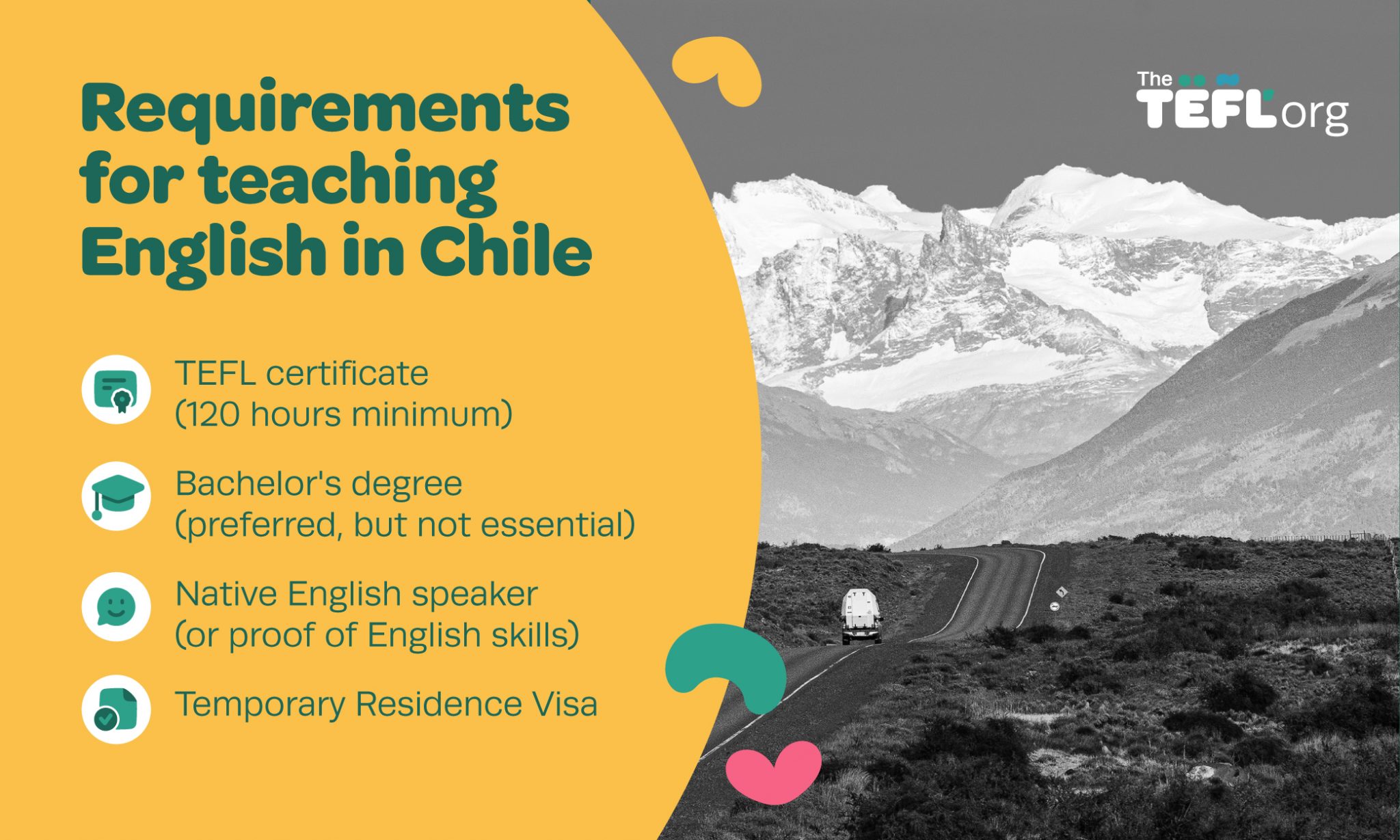
To teach English in Chile legally, you’ll need a Temporary Residence Visa. Some employers might want you to work on a tourist visa and pay you cash-in-hand — don’t do this, it risks fines and deportation.
It’s possible to apply for the Temporary Residence Visa yourself, but generally, it’s easier for teachers to find a job before applying for the visa. That way, your employer can sponsor your application.
Some jobs are advertised online, but many teachers enter Chile on a tourist visa and find work in-country before completing a visa run and returning on their Temporary Residence Visa.
Tip: A visa run is where you leave the country and return on a new visa. Some teachers enter Chile on a tourist visa and come back on their residence visa.
You’ll need to submit the following documents:
- A valid passport and scans of passport pages
- Proof of legal status in your country of residence
- Clear criminal background check
- Proof of contract with Chilean employer
- Proof of accommodation
- Bank statements (previous three months)
Download our guide to teaching English in Latin America
Everything you need to know about teaching English in Latin America
Salary and Cost of Living
The salary in Chile is generally higher than other South American countries, but so is the cost of living. So, it’s important that you know how much to expect when it comes to spending and your teacher salary in Chile.
How much can you earn teaching English in Chile?
Most teaching jobs in Chile are found in private language schools, where English teachers earn around CLP$ 600,000–840,000 ($640–$900 / £475–£665) per month. But if you’ve got specialist skills like teaching Business English or Academic English, you could earn more money working at corporate English schools or places that offer coaching for IELTS, TOEFL, and Cambridge exams.
Teachers with advanced qualifications and teaching experience can find work at an international school that pays up to CLP$ 1.5 million ($1,605 / £1,190) — or more. Some international schools offer benefits like accommodation allowances or partial flight reimbursement.
Spanish lessons are often included in other teaching jobs, but there aren’t extensive bonuses or benefits to be found outside elite schools.
How much does it cost to live in Chile?
As we’ve already mentioned, Chile is generally more expensive than other South American countries. The average English teacher can expect to spend around CLP$ 1–1.2 million ($1,070–$1,285 / £795–£955) per month on rent, food, bills, entertainment, and more. This can seem steep especially if you’re on a lower salary, but there are many ways to live on a budget.But to put it into perspective, Chile’s capital city Santiago is around 21% cheaper than Buenos Aires, and some cities in western countries like the UK and the US are twice as expensive as Chile.
As a teacher, here’s how you can get more bang for your Chilean peso:- Consider smaller cities: Santiago dominates the TEFL market in Chile, but don’t rule out other destinations like Valparaíso or Concepción which might offer lower salaries, but also lower costs of living.
- Live outside the centre: Try to avoid living in the city centre — these areas draw tourists and offer higher living costs. Living outside the city centre in Santiago, for example, can save you up to CLP$ 200,000 ($215 / £160) per month, which can go towards your gym membership, transport pass, restaurant meals, and then some!
- Eat like a local: Eating like a local isn’t just a great way to savour the culture but it’s also easy on your wallet. If you’re eating out, head to a picada (a budget eatery) or fuente de soda (a traditional fast-food eatery) to pick up meals at around CLP$ 5,000 ($5 / £3.70) per dish.
- Split the rent: Many teachers share housing with other teachers, expats, or locals. It’s not only a great way to branch out and meet people, but it can save you plenty of money. A 1-bed apartment in Santiago costs around ~CLP$ 420,000 ($450 / £335) per month, but a 3-bed apartment costs ~CLP$ 286,000 ($305 / £225) per month.
- Shop at a feria libre: A feria libre is an open-air farmers’ market where you can buy fresh produce at around 20% to 30% cheaper than at supermarkets!
| Restaurants | CLP | USD | GBP |
|---|---|---|---|
| Inexpensive restaurant meal | |||
| Domestic beer (0.5 litre) | |||
| Regular cappuccino | |||
| Water (0.33 litre) | |||
| Markets | CLP | USD | GBP |
| Regular milk (1 litre) | |||
| Loaf of white bread | |||
| Regular eggs (1 dozen) | |||
| Apples (1 kg) | |||
| Transportation | CLP | USD | GBP |
| One-way ticket (local transport) | |||
| Monthly pass (regular price) | |||
| Taxi start (normal tariff) | |||
| Gasoline (1 litre) | |||
| Utilities | CLP | USD | GBP |
| Electricity, heating, cooling, water, and garbage (for a regular apartment) | |||
| Regular prepaid monthly mobile tariff with 10GB+ data | |||
| Internet (60 Mbps, unlimited data, cable/ADSL) | |||
| Clothing and shoes | CLP | USD | GBP |
| Pair of jeans (Levis 501 or something similar) | |||
| Summer dress in a chain store | |||
| Nike running shoes (mid-range) | |||
| Men's leather business shoes |
English Teaching Jobs in Chile
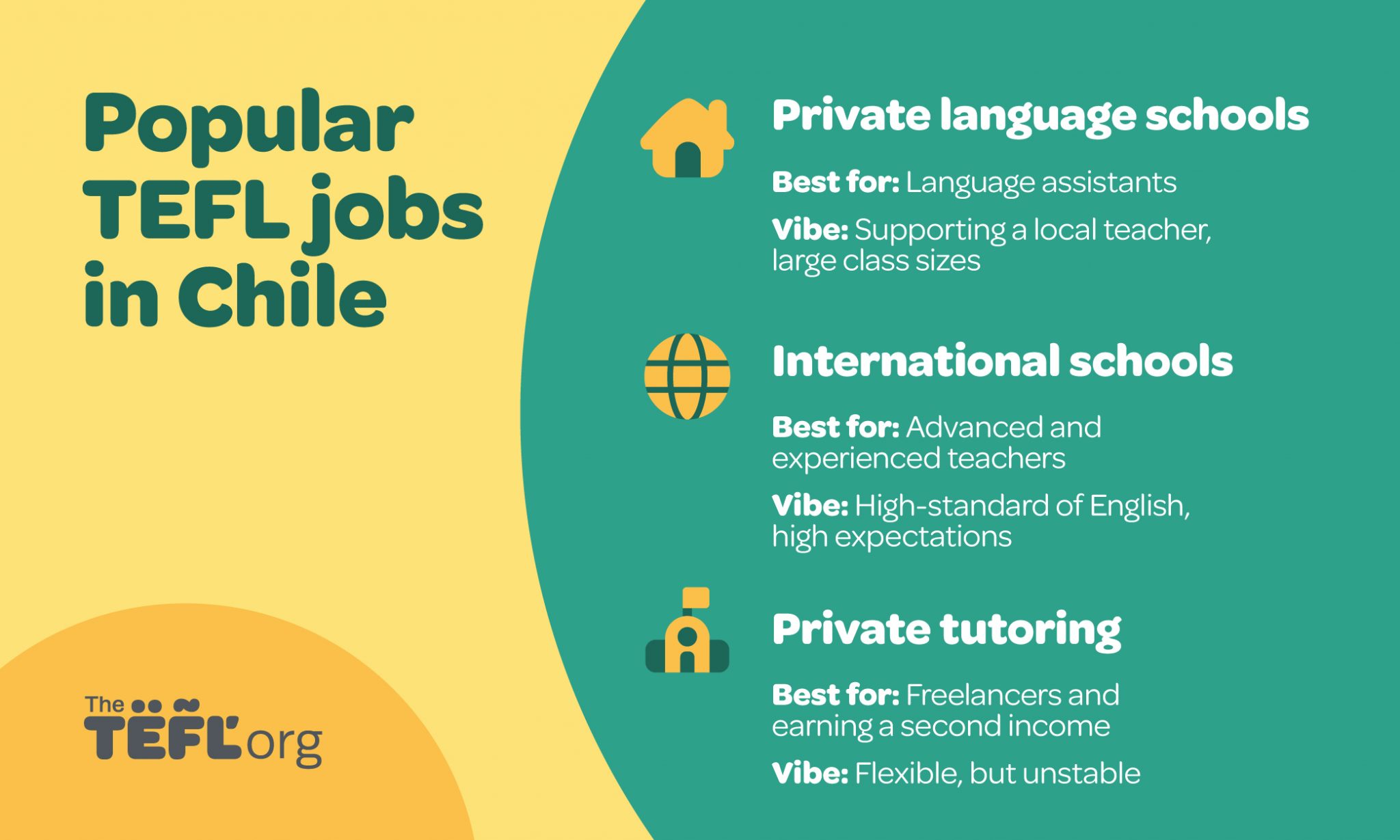
Foreigners can find English teaching jobs in Chile in public schools, private language schools, international schools and by private tutoring. Teaching opportunities exist across the country, but larger cities like Santiago, Valparaíso and Concepción are where you’ll find most jobs.
The school year begins in March, which means that November–January are busy hiring seasons. But there’s also a smaller hiring window later in the year for the second semester that starts in July.
Not all jobs are advertised online, so some teachers look for work in-person on their tourist visa. But if that sounds too risky, you can also visit The TEFL Org Job Centre or Serious Teachers to find job opportunities before arriving.
Public schools
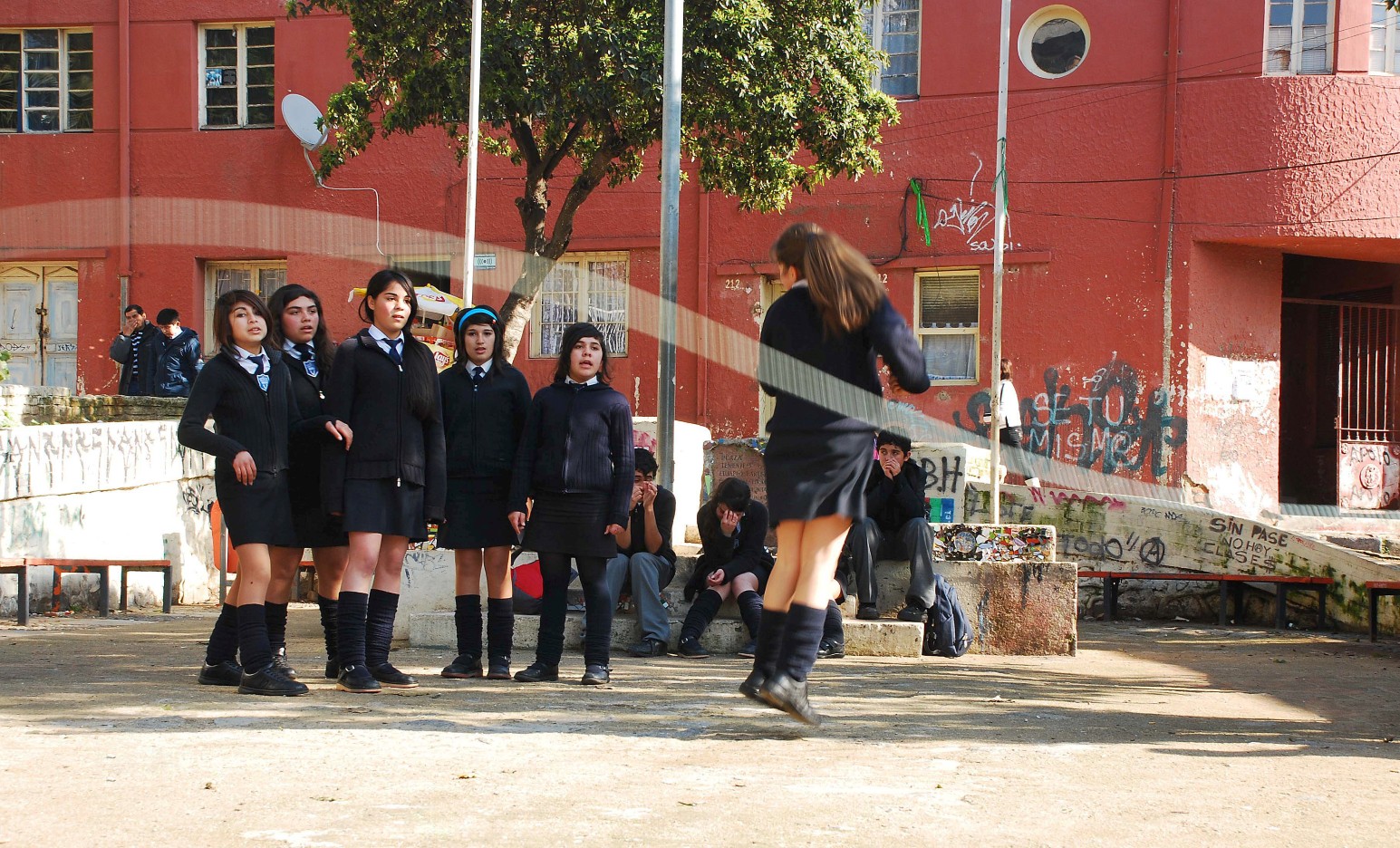
Public education in Chile has seen an increasing emphasis on English, and government initiatives like the English Opens Doors Programme (Programa Inglés Abre Puertas) place English teachers and language assistants in public schools across the country. While placements exist in larger cities, they also include rural towns where English levels are low.
To teach as a language assistant, you’ll generally need a TEFL certificate and a bachelor’s degree. Spanish proficiency will boost your application.
What to expect at public schools in Chile:
- Teaching alongside local teachers through government programmes
- ~24 hours of English teaching per week
- Following the national curriculum
- Supporting students with developing confidence in speaking English
Private language schools
Private language schools make up the bulk of Chile’s TEFL market, and they’re a common entry-point for English teachers. Despite the government’s initiatives improving English levels, there’s a generational gap for pre-2003 graduates. To bridge the gap, private language schools mostly cater to adult students looking to improve English for work, university or international exams.
This creates a demand for teachers with specialist knowledge in areas like Business English or IELTS preparation, with popular examples including Berlitz and Wall Street English.
What to expect at private language schools in Chile:
- Teaching adults and young professionals
- Evening and weekend classes
- Teaching ESP subjects (English for Specific Purposes) like Business English, exam preparation and also general English courses
- Year-round hiring, particularly in major cities
Tip: Taking an advanced TEFL course can open opportunities for teaching professionals looking to improve their Business English skills, or students looking to pass exams to study and live abroad.
International schools
International schools offer some of the best salaries and benefits to English teachers in Chile. These schools have high tuition fees and cater to international students learning English as a main language from an international curriculum. Competition is strong, and employers often require applicants to have a master’s degree, a teaching licence from their home country, and previous teaching experience to apply.
What to expect at international schools in Chile:
- Teaching an international curriculum (US, UK, or IB)
- Modern facilities and smaller class sizes
- Teaching mostly international students
- Excellent salaries and benefits, but high entry requirements
Private tutoring
Private tutoring is a popular way for teachers to get a secondary income while teaching, especially in larger cities and university towns. As a side hustle, teachers need to market themselves and network to build up their client base, and most students want to study Business English, IELTS or TOEFL exam preparation, so specialist TEFL experience is particularly valuable.
What to expect as a private tutor in Chile:
- Flexible hours around your teaching schedule
- One-to-one or small group lessons
- High demand for Business English and exam preparation
- Best suited as additional income alongside a teaching job
Teaching Programmes in Chile
English Opens Doors Programme (Programa Inglés Abre Puertas) is a Chilean government and United Nations Development programme that supports English language learning for students from the 5th–12th grade in public schools.
University students and recent graduates work as language assistants, supporting the local teacher through lesson planning, presenting activities and games, helping students 1–1, and more. This dynamic is great for entry-level teachers who want to gain experience living and working in Chile without taking on too much responsibility.
Teachers receive teacher training, pre-departure and in-country support in the form of a stipend, meals, and accommodation with a local family (which is a huge plus if you’re after cultural immersion).

Teaching English in Major Cities
Whether you’re after career progression, fast-paced lifestyle, or a laid-back environment, here are some of the top locations for teaching English in Chile.
Teach English in Santiago

Home to about 40% of Chileans, Santiago is the perfect representation of a modern, Latin American capital city. As the capital, it’s where most teaching jobs can be found, with plenty of international schools, language schools, public schools, and students looking for private English lessons.
If you’re looking for city views, head to the Cerro San Cristóbal which towers over the city’s skyscrapers and offers hilltop sightlines aided by a cable car — or hike it if you’re looking to up the tempo. If you want to take things slow, visit Santiago’s main square, Plaza de Armas, for a leisurely coffee surrounded by palm trees and colonial buildings.
Teach English in Valparaíso

Valparaíso is a photographer’s dream. This UNESCO World Heritage city is characterised by its gorgeous skylines, colourful buildings, and church spires which draw artists, tourists, and international students from all over the world to create a diverse scene.
With plenty of universities and language schools, the city offers plenty of teaching opportunities and a more affordable lifestyle than in the capital. When you’re not in the classroom, you can embrace its colourful art scene, grab something to eat and wander through multicoloured bohemian alleys, or stroll along its picturesque waterfront.
Teach English in Concepción
Concepción strikes an interesting balance as both a relaxed seaside town and a modern metropolis. As a major business hub and university city too, TEFL teachers can find plenty of job opportunities in tutoring university students or professionals looking to upskill in English. State schools and some private language schools exist, but this is primarily a university town. Living here is also fairly cheap, with lower rents and daily costs than Santiago.
Ready to Teach English Abroad? Don’t Forget Your TEFL Certificate
Ready to teach English abroad? Whether you head to South America or beyond, you’ll need your TEFL certificate before you go!
Although a TEFL certificate is something that employers look for on a CV, it’s also something that will make you confident and engaging in the classroom. Once you’re certified, you’ll have developed essential teaching skills from classroom management, lesson planning, teaching grammar structures, and so much more. And once you’re certified, you’re certified for life.Get started today with our 120-hour TEFL course.
Frequently Asked Questions
Q. Are English teachers in demand in Chile?
English teachers with TEFL certification are in high demand across Chile. You can earn a living teaching English in Chile’s state schools, international schools, language schools, universities or through private tutoring.
Q. Do I need to speak Spanish to teach English in Chile?
No, you don’t need to speak Spanish to teach English in Chile, but it definitely helps. Being fluent in Spanish or having a good command of the language can boost your job prospects and also improve your cultural immersion.
Q. What kind of visa do I need to teach in Chile?
To teach English in Chile legally, you’ll need a Temporary Residence Visa. You’ll also need a job offer and essential documents like your TEFL certificate, bachelor’s degree (if applicable), and a valid passport before you apply for the visa.
Q. When is the best time to apply for English teaching jobs in Chile?
Based on local hiring trends, the best times to apply for teaching jobs in Chile are in the lead up to March — the start of the school year — and also the winter break in July.